Powder Blue Blueberry
The Powderblue Blueberry bush is a Rabbiteye variety. Rabbiteye blueberry bushes are well suited to grow in the Southeastern US due to their vigorous growing habits and ability to withstand heat. This type of blueberry bush is easy to grow due to their low maintenance requirements and few pest issues.

Features
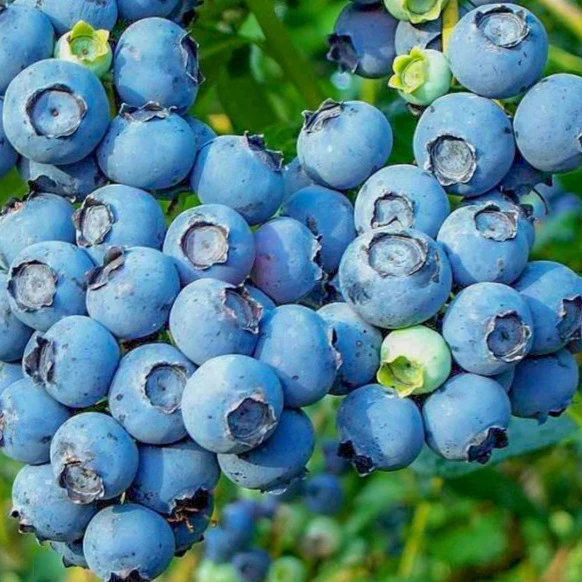
The Powderblue Blueberry gets its name from the powder blue blush that the berries gain upon ripening. It is actually one of the toughest blueberry plants with a late ripening season. The Powderblue blueberry bush has an upright growing habit that can reach a height and width of 8-12 feet. Blooms form in late spring with a harvest in late summer. The blueberries are medium sized, firm, and packed with juicy, sweet flavor.
Blueberry Comparison Chart - Self-Fertile
Blueberry Comparison Chart - Not Self-Fertile
The Importance of Blueberry Plant Pollination
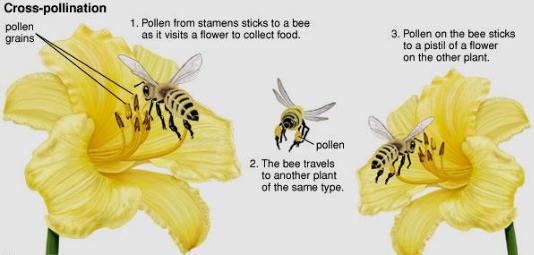
Southern Highbush plants are self-fertilizing, however Rabbiteye plants need a second plant in order to pollinate and produce fruit. Even if a blueberry bush is self-pollinating, a second bush will benefit both plants for a larger fruit production through cross-pollination. Cross-pollination refers to the spreading of pollen from one plant variety to another variety of the same species.
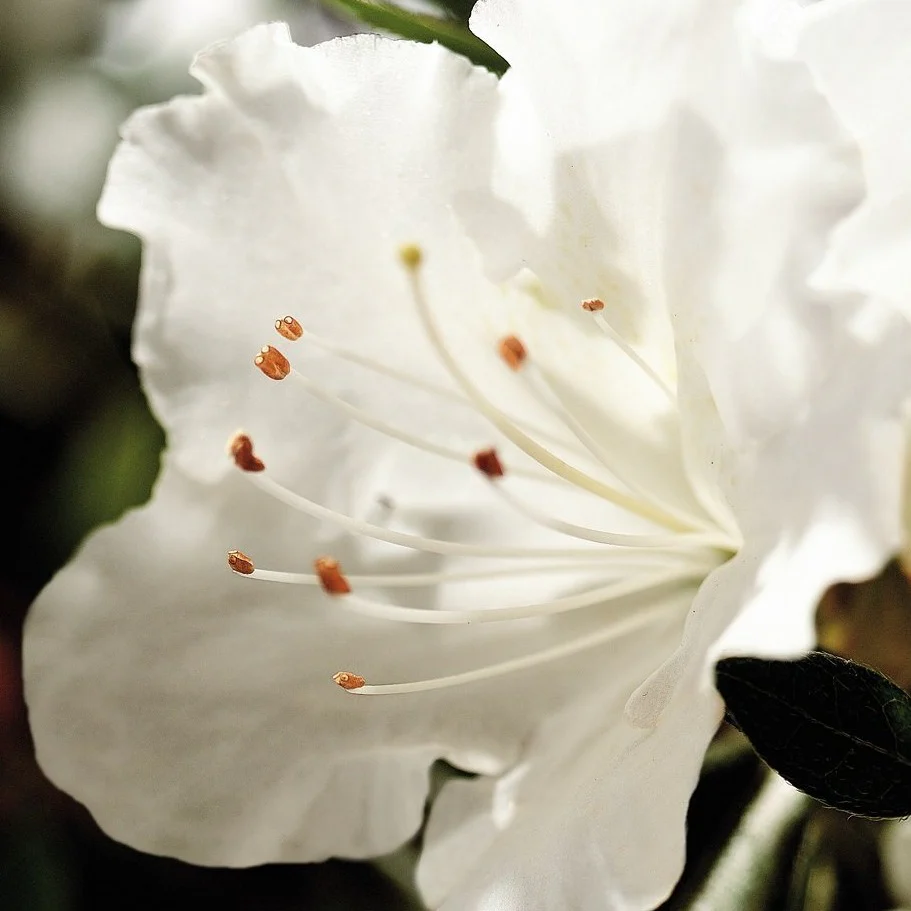
Blueberry bushes produce thousands of flowers every year, with each one having the potential to be a blueberry. In order for a blueberry plant to set fruit, the pollen produced by the flower’s anthers must reach the stigma. This will then cause a seed to develop inside the flower’s ovary. Because pollen is very sticky and heavy, it is not able to be easily moved and carried around by the wind.
The Powderblue Blueberry bush is a Rabbiteye variety. Rabbiteye blueberry bushes are well suited to grow in the Southeastern US due to their vigorous growing habits and ability to withstand heat. This type of blueberry bush is easy to grow due to their low maintenance requirements and few pest issues.
Features
The Powderblue Blueberry gets its name from the powder blue blush that the berries gain upon ripening. It is actually one of the toughest blueberry plants with a late ripening season. The Powderblue blueberry bush has an upright growing habit that can reach a height and width of 8-12 feet. Blooms form in late spring with a harvest in late summer. The blueberries are medium sized, firm, and packed with juicy, sweet flavor.
Blueberry Comparison Chart - Self-Fertile
Blueberry Comparison Chart - Not Self-Fertile
The Importance of Blueberry Plant Pollination
Southern Highbush plants are self-fertilizing, however Rabbiteye plants need a second plant in order to pollinate and produce fruit. Even if a blueberry bush is self-pollinating, a second bush will benefit both plants for a larger fruit production through cross-pollination. Cross-pollination refers to the spreading of pollen from one plant variety to another variety of the same species.
Blueberry bushes produce thousands of flowers every year, with each one having the potential to be a blueberry. In order for a blueberry plant to set fruit, the pollen produced by the flower’s anthers must reach the stigma. This will then cause a seed to develop inside the flower’s ovary. Because pollen is very sticky and heavy, it is not able to be easily moved and carried around by the wind.
Original: $36.95
-65%$36.95
$12.93Description
The Powderblue Blueberry bush is a Rabbiteye variety. Rabbiteye blueberry bushes are well suited to grow in the Southeastern US due to their vigorous growing habits and ability to withstand heat. This type of blueberry bush is easy to grow due to their low maintenance requirements and few pest issues.
Features
The Powderblue Blueberry gets its name from the powder blue blush that the berries gain upon ripening. It is actually one of the toughest blueberry plants with a late ripening season. The Powderblue blueberry bush has an upright growing habit that can reach a height and width of 8-12 feet. Blooms form in late spring with a harvest in late summer. The blueberries are medium sized, firm, and packed with juicy, sweet flavor.
Blueberry Comparison Chart - Self-Fertile
Blueberry Comparison Chart - Not Self-Fertile
The Importance of Blueberry Plant Pollination
Southern Highbush plants are self-fertilizing, however Rabbiteye plants need a second plant in order to pollinate and produce fruit. Even if a blueberry bush is self-pollinating, a second bush will benefit both plants for a larger fruit production through cross-pollination. Cross-pollination refers to the spreading of pollen from one plant variety to another variety of the same species.
Blueberry bushes produce thousands of flowers every year, with each one having the potential to be a blueberry. In order for a blueberry plant to set fruit, the pollen produced by the flower’s anthers must reach the stigma. This will then cause a seed to develop inside the flower’s ovary. Because pollen is very sticky and heavy, it is not able to be easily moved and carried around by the wind.